

Qinara News ·
Qinara releases ACTIVE, an open-source observable-conditioned quantum circuit reduction tool using NVIDIA CUDA-Q
Independent evaluation with NVIDIA CUDA-Q and results from an IBM Heron r2 processor accompany the open-source release.
- Qinara
- Quantum software
- Open source
We are releasing ACTIVE, an open-source observable-conditioned quantum circuit reduction tool from Qinara.
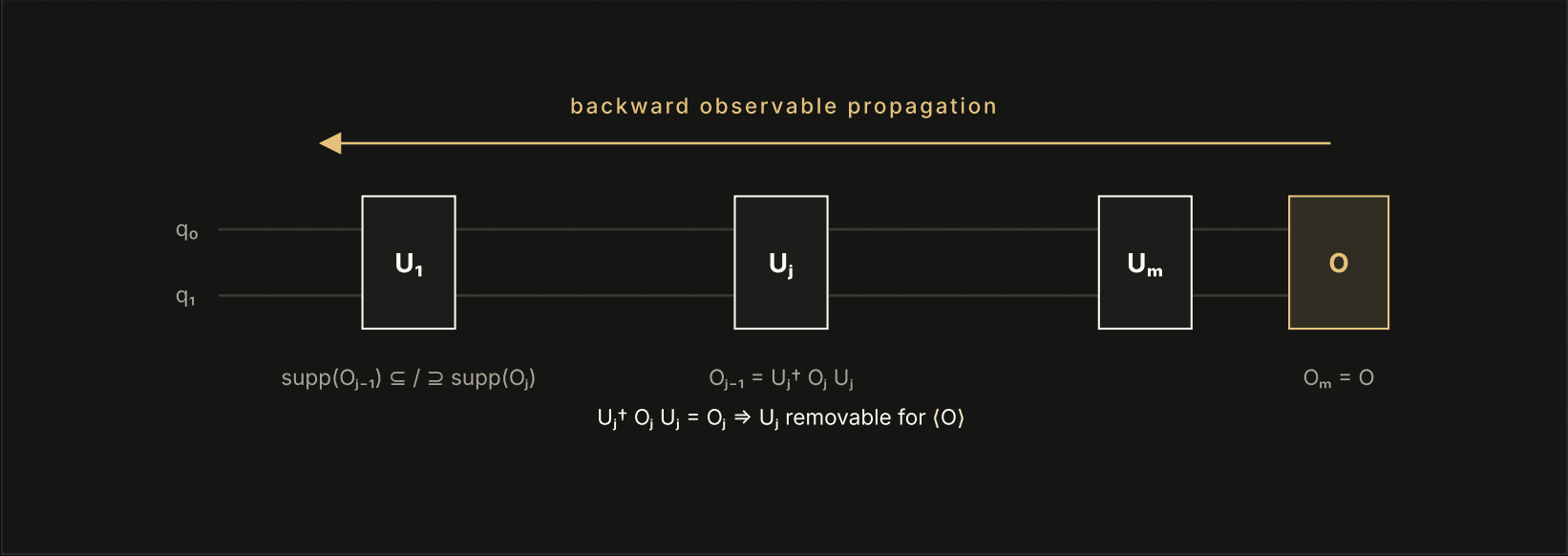
ACTIVE propagates the target observable backwards through the circuit and removes operations that cannot contribute to the requested expectation value. Because the observable is tracked algebraically, its support can contract during propagation, exposing additional upstream operations for elimination while retaining the original target observable.
Observable-conditioned reduction
ACTIVE propagates the target observable backwards through the circuit and removes operations that cannot contribute to the requested expectation value. The observable is tracked algebraically, so its support can contract during propagation and expose additional upstream operations for elimination while the original target observable is retained.
40-case benchmark snapshot
Original vs ACTIVE-reduced circuits
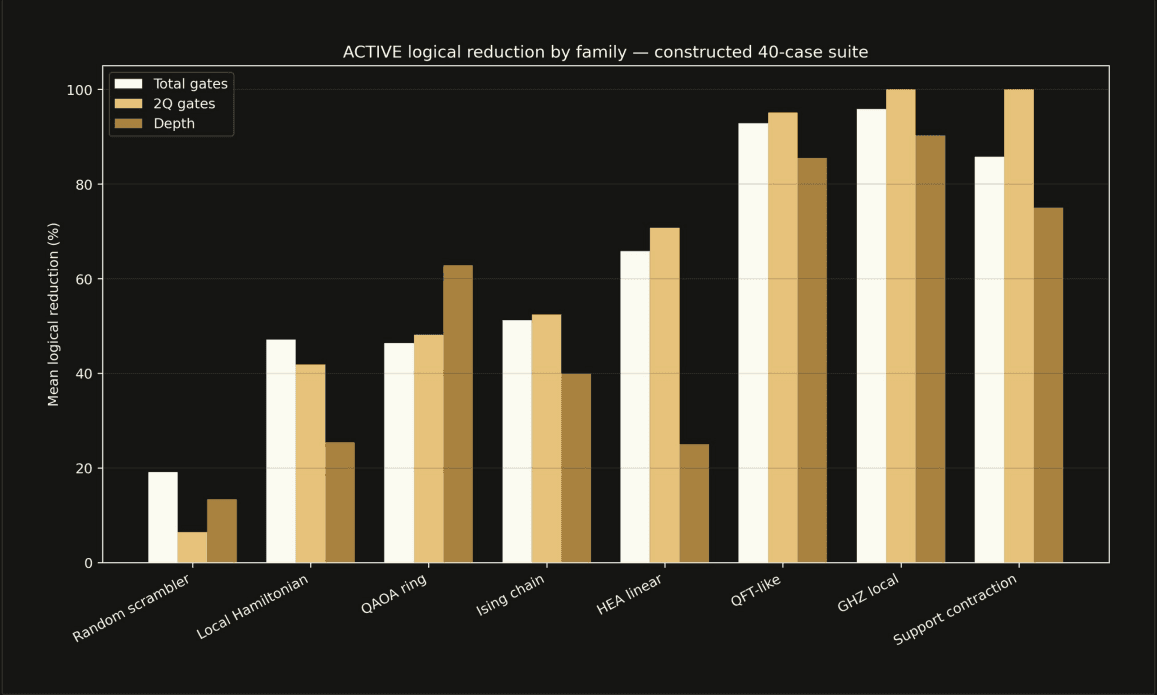
63.0%
mean reduction in total gates
64.3%
mean reduction in two-qubit gates
52.2%
mean reduction in circuit depth
8.88×10⁻¹⁶
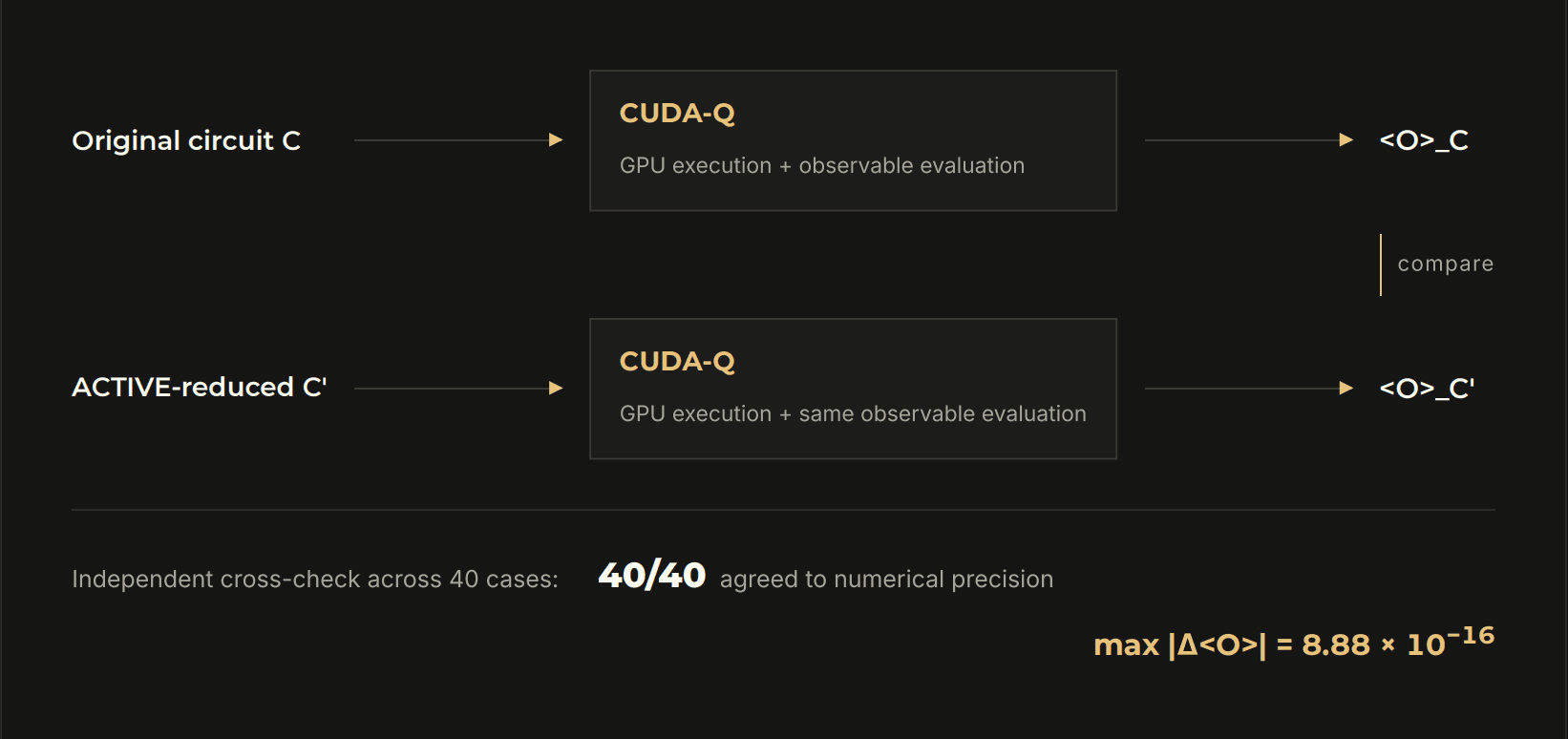
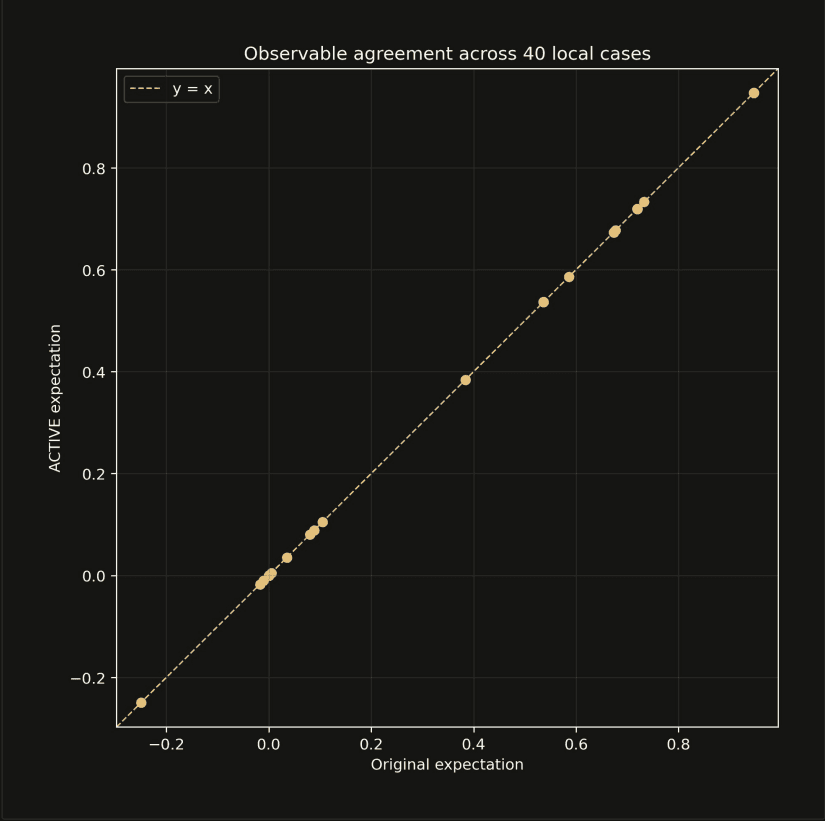
maximum independent original/reduced expectation difference
40/40
independent target-observable checks agreed to numerical precision
40/40
cases with Pauli-term count unchanged
Heisenberg-picture observable propagation used for gate relevance
Independent evaluation with NVIDIA CUDA-Q
Independent execution and observable-validation path
NVIDIA CUDA-Q , the open platform for hybrid quantum-classical supercomputing, was used as an independent execution and validation environment for both the original and ACTIVE-reduced workloads, outside ACTIVE's own verification stack. The same target observable was evaluated on both circuit variants, providing a separate execution path for checking preservation of the requested expectation value.
CUDA-Q was also used for GPU-accelerated simulation and repeated observable evaluation across the benchmark suite, making it the primary independent execution environment in the validation workflow rather than an internal component of ACTIVE's reduction algorithm.
Matched observable evaluation in NVIDIA CUDA-Q
40-case benchmark results
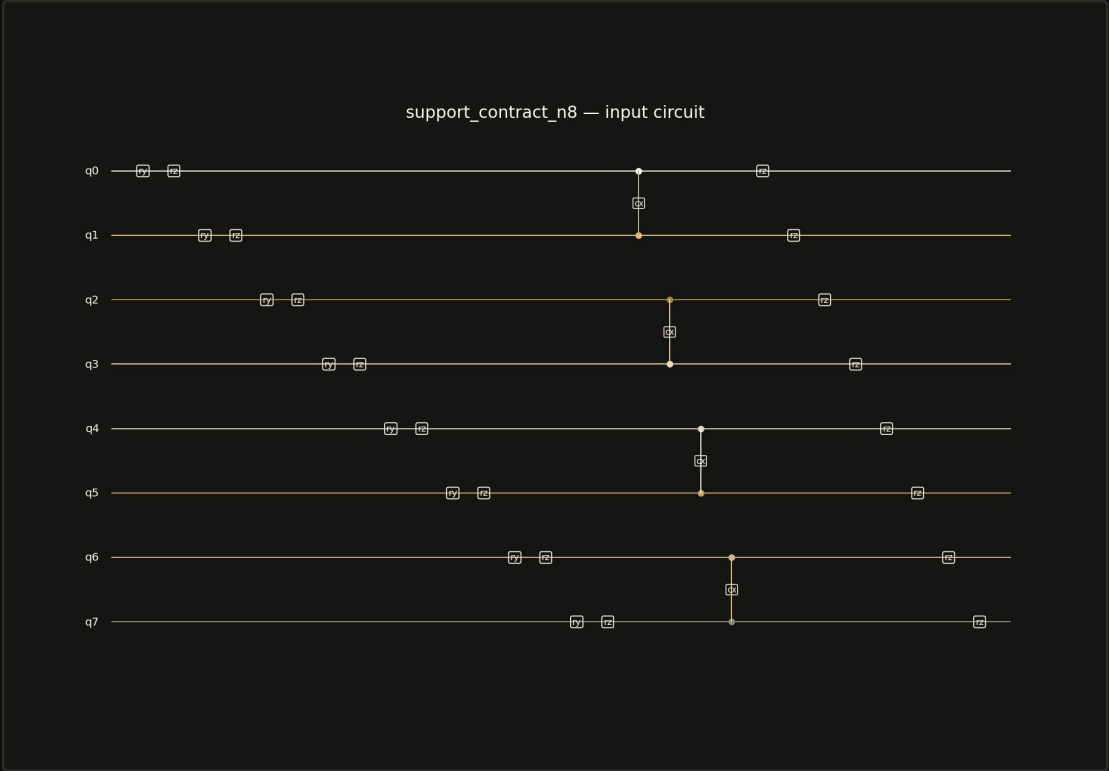
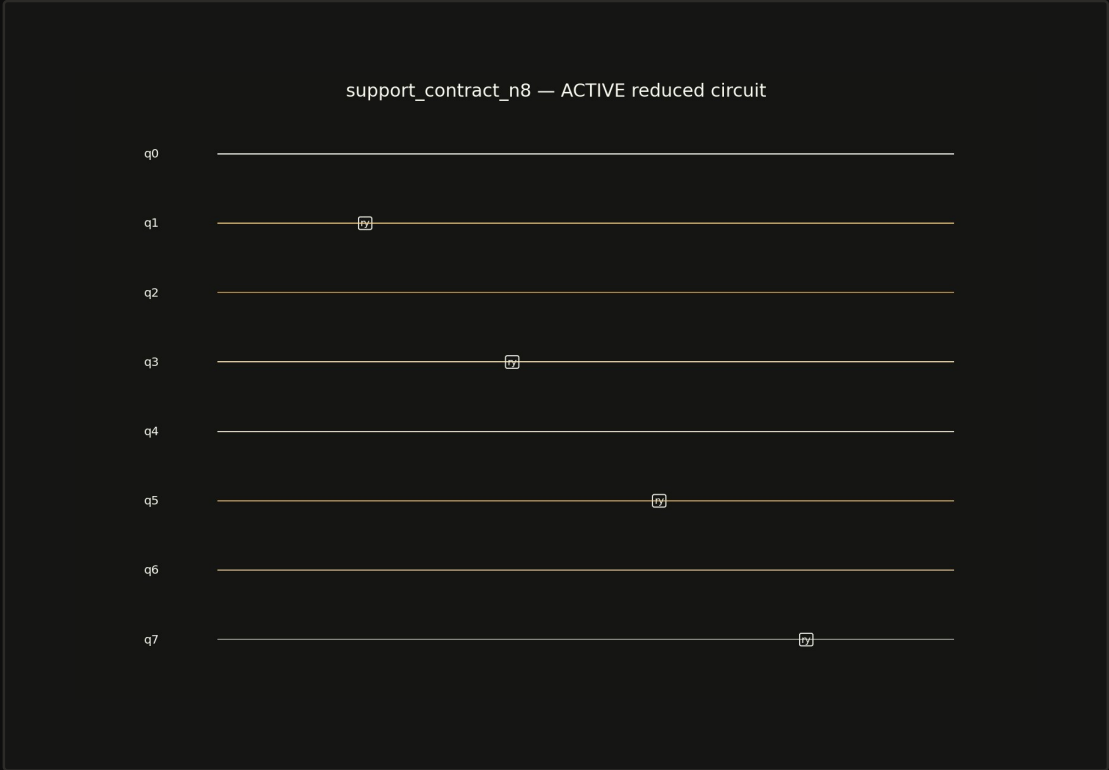
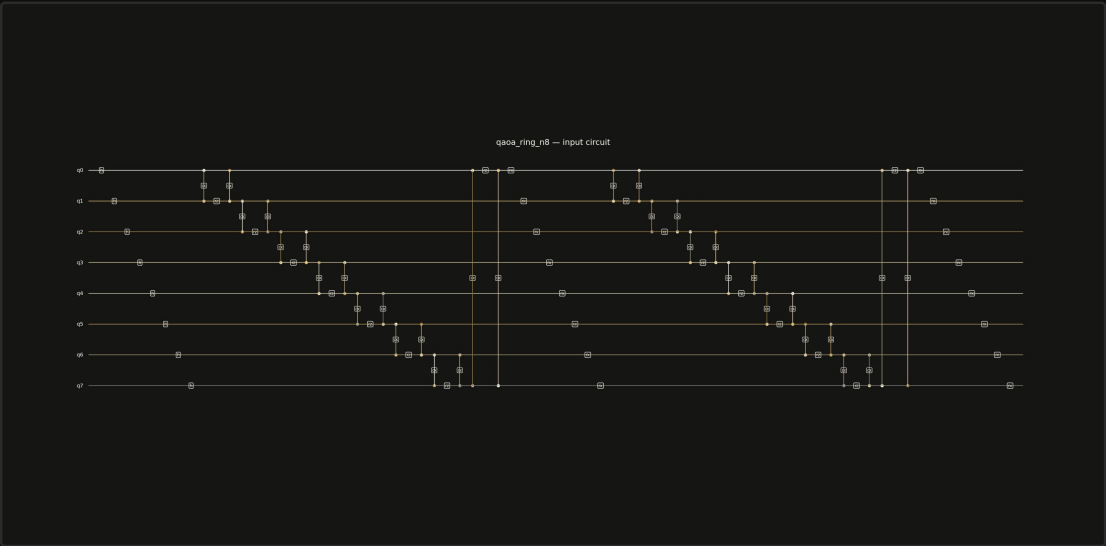
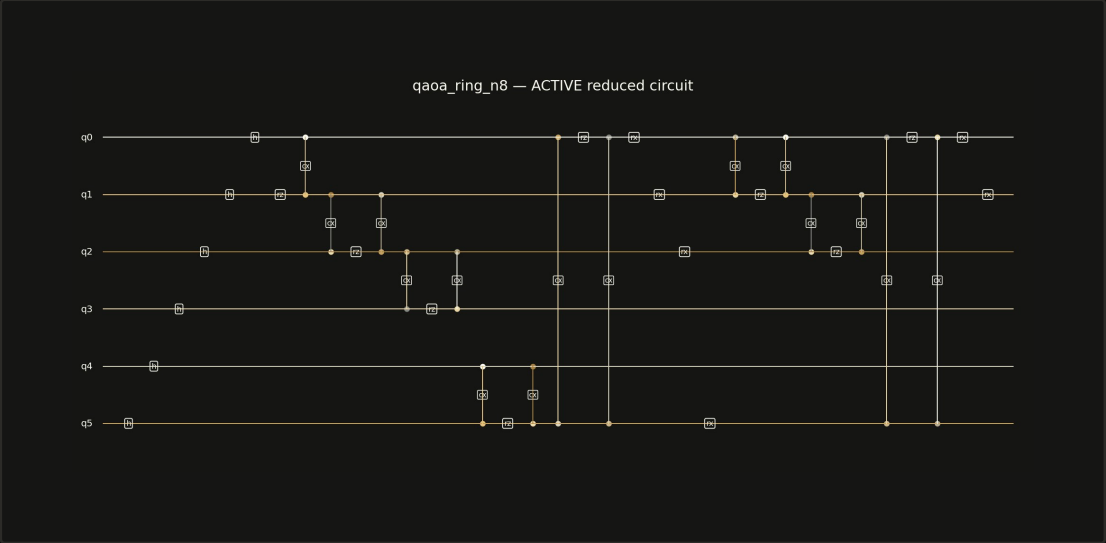
Selected 8-qubit circuit pairs
| Circuit | Qubits | Total gates | Δ gates | 2Q gates | Δ 2Q | Depth | Δ depth |
|---|---|---|---|---|---|---|---|
| Support contraction | 8 | 28 → 4 | 85.7% | 4 → 0 | 100.0% | 4 → 1 | 75.0% |
| GHZ / local | 8 | 29 → 1 | 96.6% | 7 → 0 | 100.0% | 11 → 1 | 90.9% |
| QAOA ring | 8 | 72 → 35 | 51.4% | 32 → 15 | 53.1% | 51 → 15 | 70.6% |
| HEA linear | 8 | 69 → 20 | 71.0% | 21 → 5 | 76.2% | 12 → 9 | 25.0% |
| QFT-like | 8 | 40 → 2 | 95.0% | 32 → 1 | 96.9% | 16 → 2 | 87.5% |
| Ising chain | 8 | 95 → 40 | 57.9% | 42 → 17 | 59.5% | 37 → 21 | 43.2% |
| Random scrambler | 8 | 80 → 64 | 20.0% | 16 → 15 | 6.2% | 15 → 13 | 13.3% |
| Local Hamiltonian | 8 | 54 → 25 | 53.7% | 14 → 7 | 50.0% | 14 → 10 | 28.6% |
Results from IBM Quantum
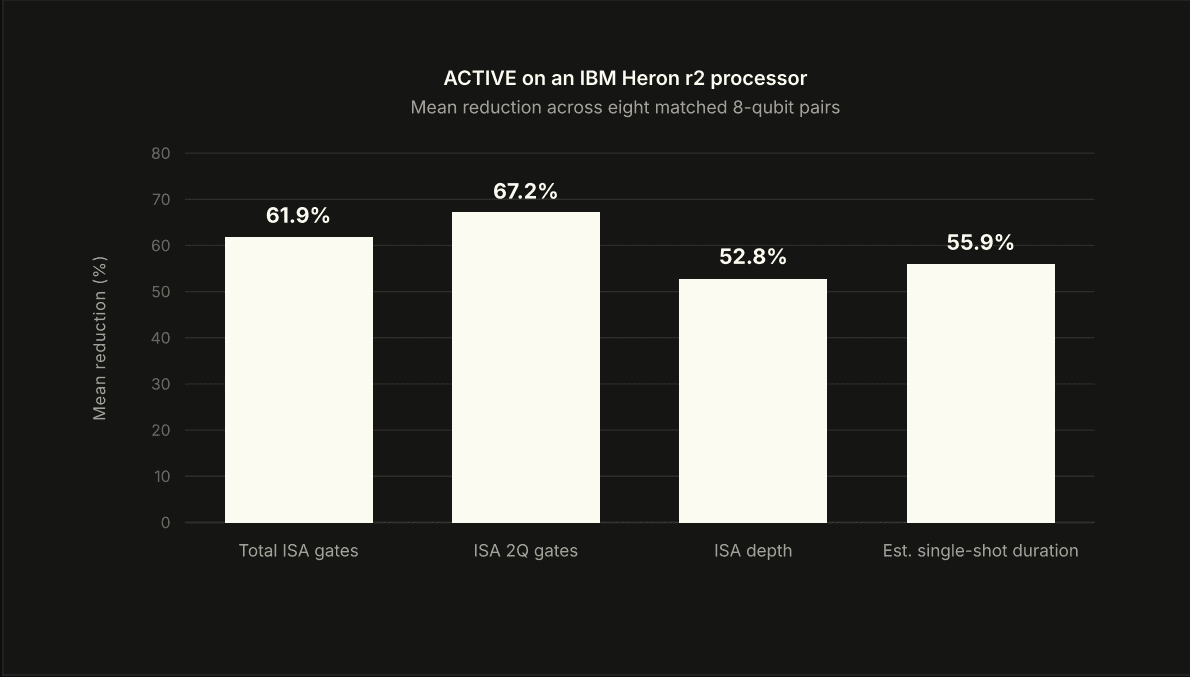
Eight matched 8-qubit original / ACTIVE circuit pairs
IBM Heron r2 processor
Same backend, Qiskit optimisation level, transpiler seed and matched initial physical layouts.
61.9%
mean reduction in total ISA gates
67.2%
mean reduction in ISA two-qubit gates
52.8%
mean reduction in ISA circuit depth
55.9%
mean reduction in estimated single-shot circuit duration
6 of 8 hardware cases had lower point-estimate absolute error against the independent exact statevector reference.
6.25% ISA two-qubit reduction on the random-scrambling negative control.
We executed eight matched 8-qubit original/ACTIVE circuit pairs on an IBM Heron r2 processor, using the same backend, Qiskit optimisation level, transpiler seed and matched initial physical layouts. After transpilation on an IBM processor, the aggregate reductions above were observed.
The random-scrambling negative control showed only 6.25% ISA two-qubit reduction, consistent with ACTIVE exploiting observable/circuit structure rather than producing uniform reduction across arbitrary circuits.
Fault-tolerant quantum computing
When fault-tolerant quantum computing (FTQC) is achieved, ACTIVE will operate before synthesis and QEC, so operations removed at the logical level will be absent from the downstream FT compilation problem.
Projected downstream effects of logical reduction
T-count
non-Clifford synthesis
T-depth
logical critical path
Magic states
consumption / distillation
QEC cycles
logical depth / scheduling
For non-Clifford reductions, this can reduce T-count, T-depth, synthesis demand and magic-state consumption. Reductions in logical entangling structure and active support can also propagate into lower logical depth, scheduling pressure and QEC cycle requirements.
We are evaluating these effects through the NVIDIA CUDA-Q fault-tolerant workflow, comparing downstream resource estimates before and after ACTIVE under matched FT compilation assumptions.
ACTIVE will be released open source together with the methodology, benchmark circuits, CUDA-Q validation and results on IBM Quantum computers.